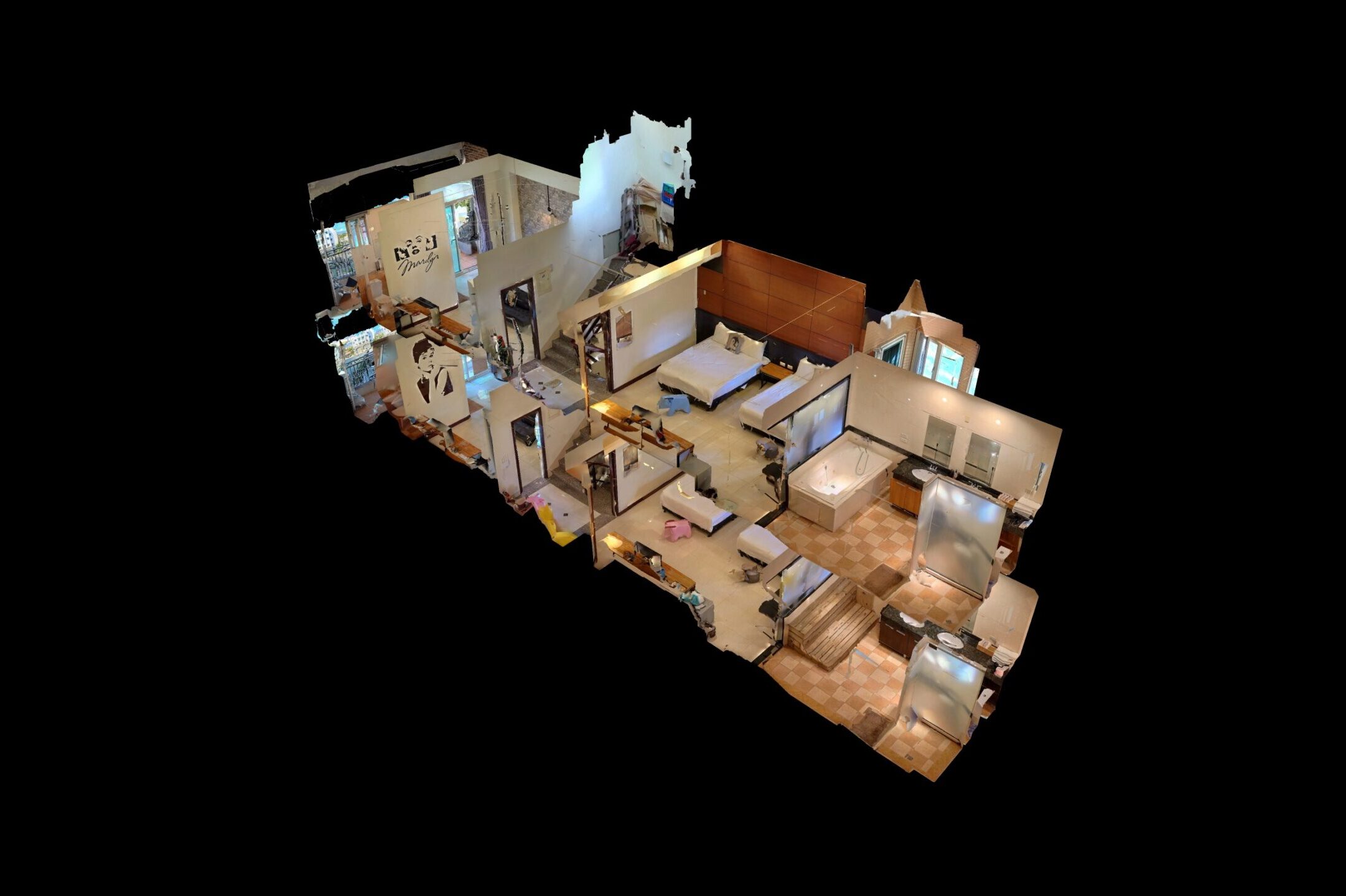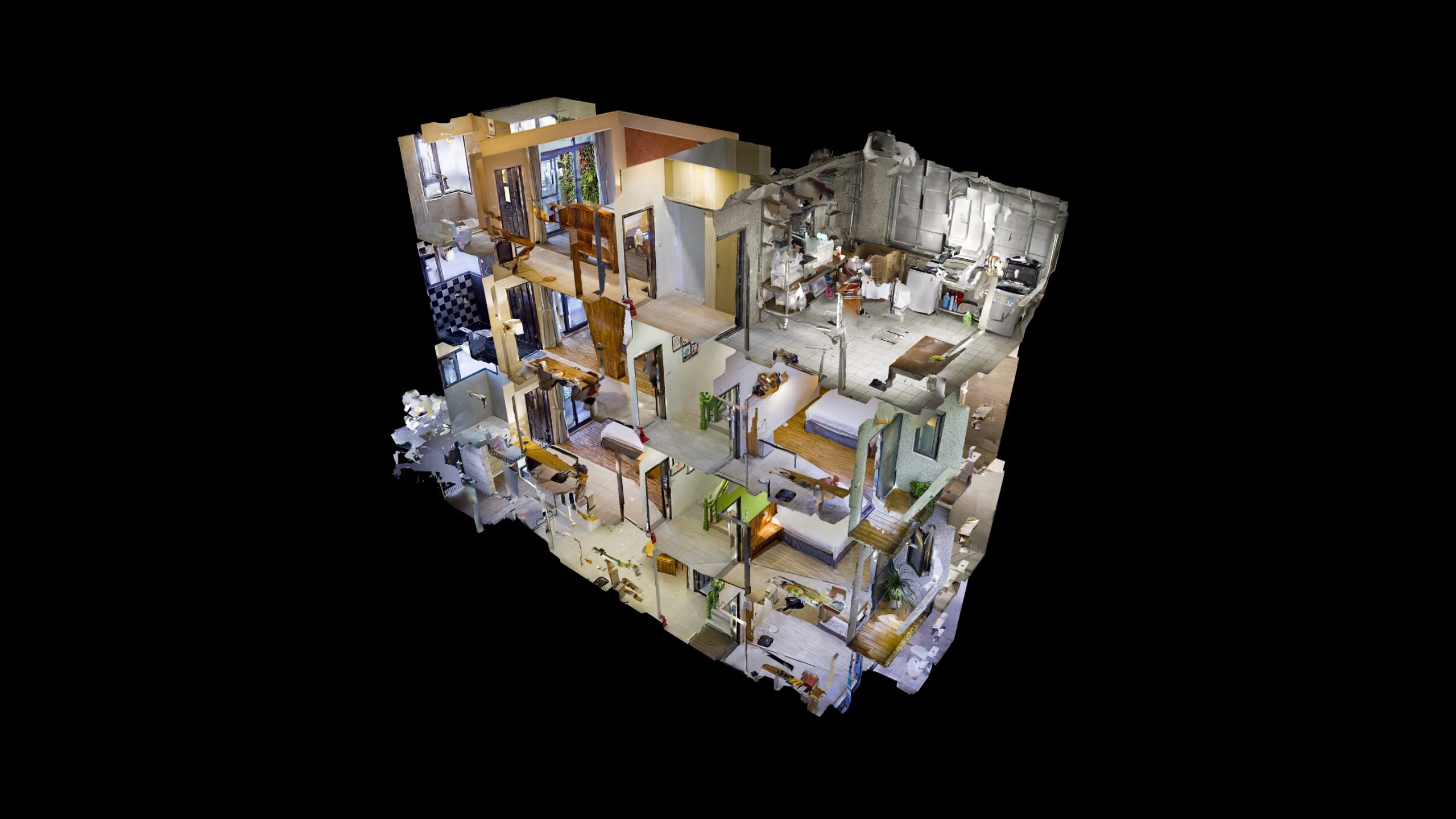
The MatterPort® Dollhouse presentation mode emphasizes the spatial relationships and the complete layout of a property.
What was once only possible to view in a physical model home can now be fully experienced on a viewer’s smartphone, tablet, or computer—without ever leaving home—delivering a true online property viewing experience.Online House Viewingexperience effect.
The application of Dollhouse is most common in real estate sales, interior decoration, and related industries. Because it can fully present the layout of the entire interior space and even details of the decoration, it has become a necessary service in the real estate industry in Western countries. This breaks the limitations of geographic location, providing consumers with comprehensive property presentations regardless of distance, thereby attracting buyers' attention and serving as a first-level screening for buyers. This makes it easier for interested buyers to locate and focus on suitable properties.
The 2022 annual report from the National Association of Realtors (NAR) in the United States states:
1. 41% of homebuyers’ first step is to narrow down the desired property type online, while only 19% of buyers start by directly contacting a real estate agent to inquire about properties.
2. 51% of buyers found the home they purchased through online searches, while only 28% found their purchased property through a real estate agent.
3. 56% of buyers consider "finding the right property" to be the most challenging part of the home-buying process.
4. After finding a property online, 55% of buyers prefer to browse the property details virtually.
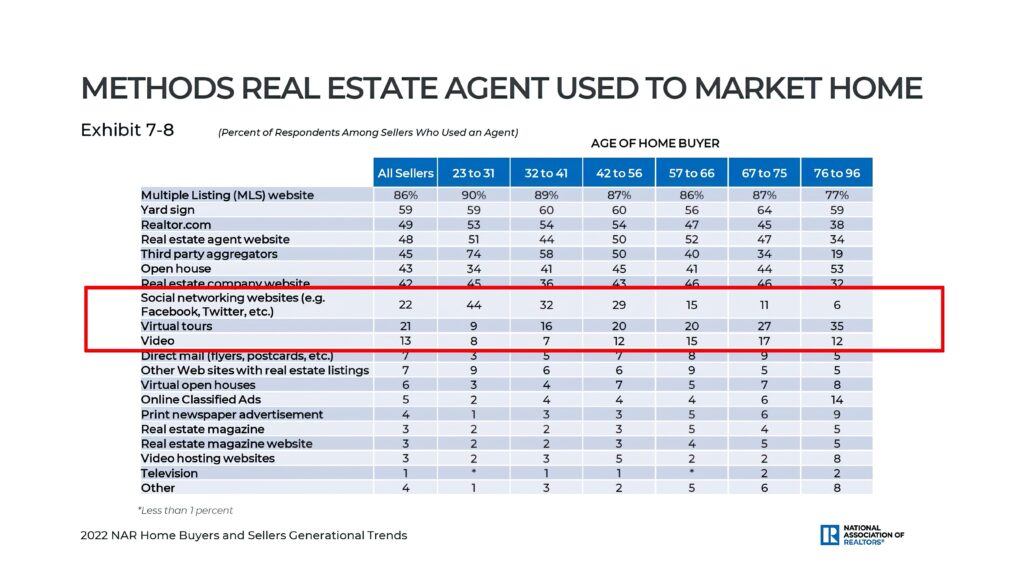
Therefore, based on the above analysis, most buyers tend to search, filter, and make decisions online before proceeding to visit the property in person. As the most powerful marketing tool for real estate agents, the Dollhouse allows buyers to obtain information online that they might not be able to fully capture even when visiting the property in person. Similarly, when planning a long-distance trip that involves overnight stays, we often rely on online searches to find suitable accommodations. If the property owner can provide a detailed and refined introduction to the room types and public facilities, we are more likely to spend additional time browsing the owner’s website, thereby increasing our willingness to choose their offering.
In the field of real estate brokerage, online property sales are conducted not only through real estate company websites but also increasingly via social media platforms such as Facebook and Twitter, making extensive use of virtual tours and videos. We can conclude that the primary sales model for real estate brokers has rapidly shifted from traditional flyers, television commercials, and YouTube advertisements to social media and virtual tours, with the share of these new methods increasing year by year.
The **home renovation and interior design industry** can leverage the application of Dollhouse to facilitate real-time, two-way communication and coordination between contractors and property owners entirely online. By using the platform’s Mattertag feature, users can freely create virtual “sticky notes” anywhere within the property, serving as a direct channel for discussions between the construction team and the client. In addition, it supports embedding text, web links, and multimedia content, allowing Dollhouse to function not only as a showcase but also as an interactive platform and a virtual tour tool.
In summary, the emergence of 3D model houses, such as the Dollhouse, has not only revolutionized property sales in the real estate industry but has also continuously driven the market toward full digitalization. A well-designed sales process that encourages potential clients to spend more time engaging with a company’s promotional channels in the early stages inherently increases the likelihood of closing a sale later. Long-term analysis from Europe and the United States shows that traditional passive marketing methods—such as printed brochures, TV commercials, and roadside signboards—are rapidly losing their appeal to homebuyers. In an economic landscape moving swiftly toward digitalization, only those who skillfully leverage modern tools can effectively generate profit.
 English
  Chinese