
Thanks to modern technology, most built-in cameras on today’s smartphones offer panoramic photo shooting capabilities. By simply following the on-screen instructions, users can capture images with a wider field of view than ordinary photos. However, such photos can only be considered “wide-angle” images; although the field of view is broad, they cannot yet provide the full 720º view that a full panorama can offer.
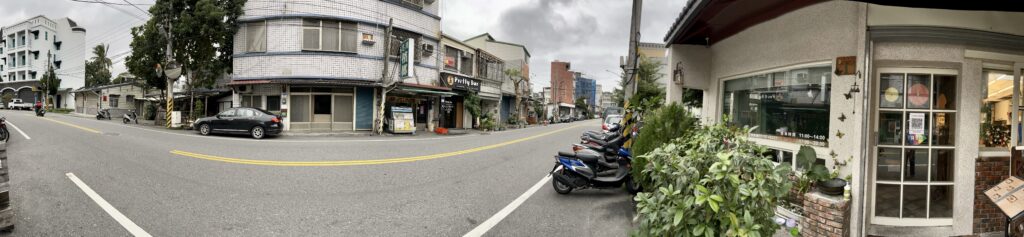
A typical 360º panoramic photo refers to an image that covers a full 360º horizontal field of view, commonly known as a panoramic photo. Thanks to the significant improvements in computing power of both computers and handheld devices, real-time image projection transformations have become feasible on personal computers, which has gradually expanded the market applications of 360 panoramic imaging.
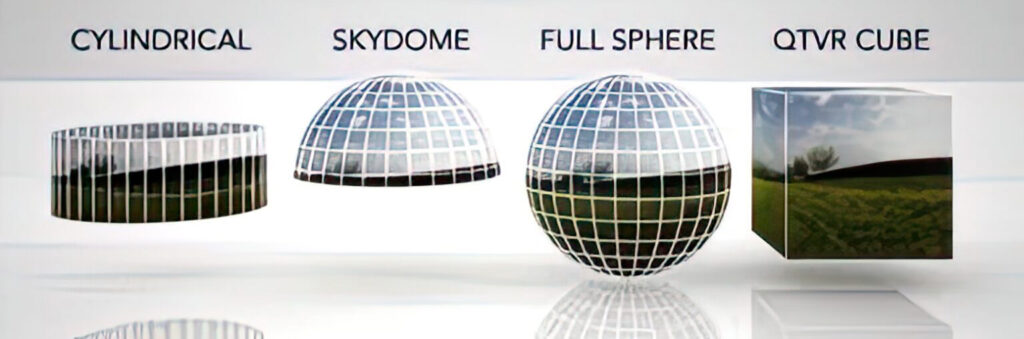
Different types of panoramic images include:
Cylindrical Panorama
Skydome Panorama
Full Sphere Panorama
QTVR Cube
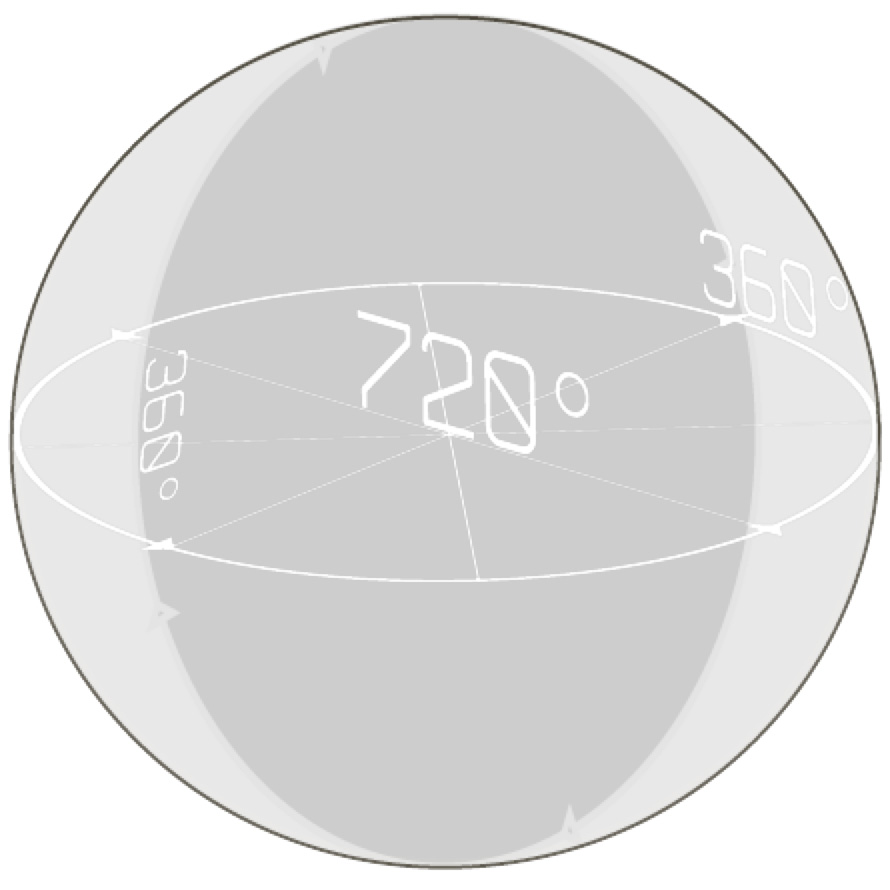
A 720-degree panoramic photo refers to:A horizontal and vertical field of view reaching 360ºa full circular field of viewIn other words, a typical 360 photo only defines the horizontal field of view and does not include the vertical field of view, thus not encompassingZenithandNadirview.
A 720-degree photo covers both a 360-degree horizontal and a 360-degree vertical field of view. Combining these two 360-degree views results in what is called a 720-degree field of view, giving rise to the new definition of a 720 panorama. Internationally and academically, such photos encompassing both horizontal and vertical views are collectively referred to as “spherical panoramas.” This classification is primarily based on the way the human eye perceives the world through projection, hence it is defined as 「Spherical Panorama」
How are panoramic photos created?
Panoramic photos can be captured using third-party apps on smart devices, which take multiple overlapping vertical images of partial scenes and stitch them together through internal app processing to create a cylindrical panoramic photo.
The video on the left explains that the key to creating cylindrical panoramic photos is to repeatedly capture multiple overlapping images of adjacent areas. During internal processing, the stitching relies heavily on these overlapping sections to accurately align and merge the photos, resulting in a seamless panoramic image.
How can a full panoramic photo be created?
The difference between virtual tour panoramic photos and cylindrical panoramic photos lies in the field of view range. To be classified as a panoramic photo (spherical panorama), it must achieve a full 360º view both vertically and horizontally.
Currently, in the consumer market, shooting tools are available such as dual fisheye lens panoramic cameras, for example Insta 360 One X2 、Ricoh theta Z1 or multi-lens cameras such asQoocam 8K series products, or products that use a single-lens coaxial rotating photography system such as trisio Lite2 Panoramic cameras such as these allow you to obtain basic quality panoramic photos with minimal cost (both financial and time). The shooting method involves simultaneously capturing images through multiple fisheye lenses on the camera body (except for the Trisio Lite2). Then, using the computational mechanism of the product’s companion app, multiple photos with partially overlapping fields of view are stitched together to create a single panoramic image.
The advantages of this type of panoramic camera are its small size, short shooting time, and user-friendly app operation, making it ideal for low-budget panoramic photo production. The drawback is that the photo quality is somewhat lacking.
For example, manufacturers may claim that their panoramic photos reach 8K resolution. However, considering that the entire 8K resolution is spread across a 720º view, the actual viewing experience does not truly deliver 8K quality. Cameras with resolutions lower than 8K fare even less. Besides the image quality issue, there is also the stitching problem. In the photos taken with the Pano Camera app shown below, many stitching errors are evident. While professional stitching software can address such issues, it still cannot overcome the time-consuming post-processing and physical limitations that cause color shifts, insufficient detail, and difficulty in controlling lighting.
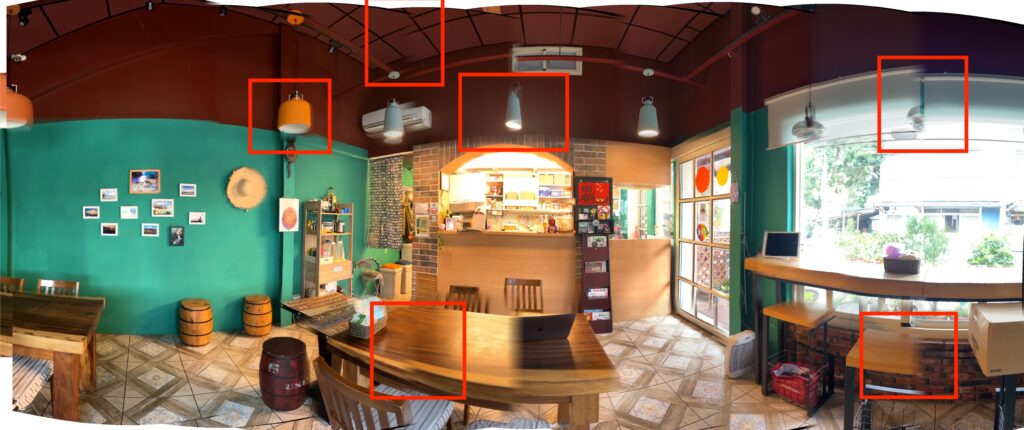
The quality of a photo can be evaluated based on many factors, but from a viewer’s perspective, it mainly comes down to image sharpness, clarity, color accuracy, and saturation. Currently, consumer-grade panoramic cameras have much smaller image sensors compared to regular DSLR cameras, as portability is a key product focus. As a result, these smaller sensors heavily rely on sufficient lighting for proper exposure. Additionally, the smaller sensor size compromises color depth and dynamic range performance, often causing highlights (such as overly bright areas outside windows in the image above) to be overexposed without detail, or shadows (dark areas in the image) to have excessive noise, leading to reduced image quality.
Is there better image quality available?
Absolutely! Thanks to technological advancements, DSLR cameras—originally designed for flat images and video—now excel in capturing 16K-quality 720 panoramic photos. This is achieved through superior image sensors, low noise ratios, rich color depth, combined with specialized panoramic shooting equipment and powerful professional photo editing and stitching software. Using a DSLR for panoramic photography not only dramatically surpasses the image quality of typical consumer-grade panoramic cameras and smartphones but also effectively resolves common stitching issues encountered when shooting in tight spaces with standard 360 cameras. Moreover, it offers excellent nadir (ground) representation without the image quality compromises that 360 cameras face when removing tripods.
With the advancement of technology, panoramic photography is expected to gradually replace flat photos in marketing in the foreseeable future. Thanks to improvements in both hardware and software, panoramic photography will become increasingly accessible to the general public, and its ease of use combined with superior performance will fundamentally transform the landscape of online marketing.
Why implement panoramic photography now?
The application of panoramic photography is comprehensive, suitable for attractions, accommodations, real estate, exhibitions, and more. Although the entry barrier is somewhat high now, why implement it at this moment? Business success relies on mastering the market and customer base. Introducing panoramic photography tours now allows you to get ahead in the market and gain marketing advantages. If you wait until panoramic tour services are widely adopted by competitors, even then, adopting such services will not recover the lost unique market position and the early opportunity to attract loyal customers.